Locked Out by Your Zip Code: How 2026's Biggest Games Are Treating Global Players Like Second-Class Customers
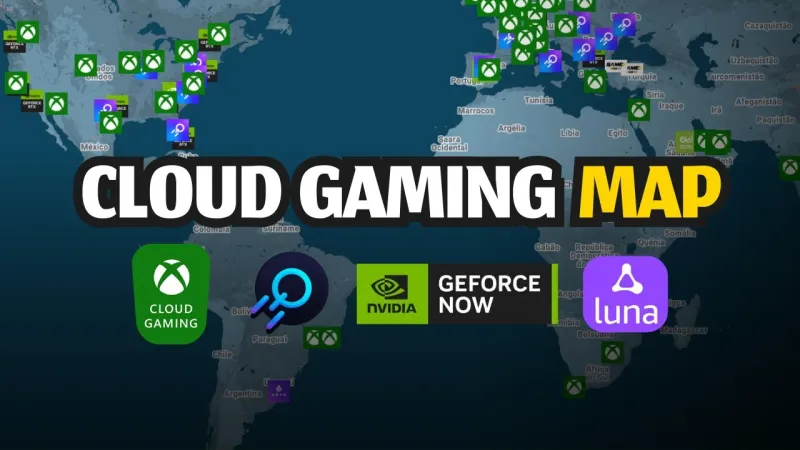
Photo: global gaming map official, via i.ytimg.com
If you're reading this from the US, there's a decent chance you've never had to think too hard about regional release timing. North America tends to sit in the priority tier for most major publishers — the launch happens here, the servers go live here, and the marketing machine is aimed squarely at this market. But a significant chunk of the global gaming audience doesn't share that experience, and in 2026, the gap between first-class and second-class release treatment has gotten wide enough to become a genuine consumer rights conversation.
Staggered global launches, territory-specific content restrictions, time-zone exclusivity windows, and regional pricing disparities are all real and documented features of how major games are being sold right now. This is what's happening, why it's happening, and — because we'd rather be useful than just angry — what players in affected regions can actually do about it.
The Mechanics of a Regional Lockout
Let's establish the different ways a game can treat you differently based on where you live, because they're not all the same thing and they don't all have the same causes.
Hard regional delays are the most straightforward and the most defensible, at least in theory. These are situations where a game launches in North America and Europe on a given date but doesn't release in other territories — Southeast Asia, Latin America, the Middle East — until weeks or months later. The stated reasons are usually localization timelines, regional certification requirements, or local platform holder certification processes. These are real constraints. They're also constraints that get prioritized or deprioritized based on how much a publisher values a given market.
Content lockouts are a different and more specifically frustrating category. This is when the game is available in your region but specific content — DLC, cosmetics, story chapters, multiplayer modes — is restricted due to regional rating board requirements or publisher decisions about what content to submit for approval in which markets. Players in these territories aren't getting a delayed version of the game; they're getting a different, lesser version.
Time-zone exclusivity windows are the most technically trivial but emotionally irritating form of regional disparity. When a game unlocks at midnight Eastern Time, players in Western Europe are already in their morning, players in Asia-Pacific are well into their next day, and players in Australia have been awake for hours waiting for a launch that the publisher decided to anchor to a US clock. This is a deliberate choice. Global simultaneous unlocks exist and work fine. Publishers that don't use them are making a decision.
Regional pricing disparities are the most complex category and the one that generates the most legitimate debate. Games cost different amounts in different markets, sometimes reflecting local purchasing power, sometimes reflecting currency fluctuations, and sometimes reflecting a publisher's assessment of what a market will bear. When the gap between what a US player pays and what a player in another region pays for the same product becomes large enough, it creates arbitrage opportunities — and publishers respond to those with geo-blocks that trap players in their local storefronts.
Who's Getting Hit Hardest in 2026
The territories experiencing the most significant friction in 2026's release landscape fall into a few consistent categories. Southeast Asia — particularly markets like Indonesia, Vietnam, Thailand, and the Philippines — continues to be treated as a secondary tier by most major Western publishers, with delays and content restrictions that rarely make headlines in US gaming coverage but are a persistent source of frustration in those communities.
Latin America faces a different but equally real set of issues, primarily around pricing volatility tied to currency instability in markets like Argentina and Brazil. Publishers have responded to regional pricing pressure in these markets with a combination of price adjustments and storefront restrictions that have made purchasing globally released games more complicated and expensive in real terms than the nominal local price suggests.
Australia and New Zealand, despite being English-language markets with high gaming spend per capita, continue to deal with time-zone exclusivity windows that feel increasingly indefensible in an era of digital distribution. There is no technical reason a game needs to unlock 14 hours later in Sydney than in New York. It's a choice.
The Publisher Calculus (And Why It Produces This Outcome)
Understanding why publishers make these decisions doesn't require assuming bad faith — though bad faith is occasionally present. The more common driver is a combination of risk management and resource allocation.
Localization, regional certification, and territory-specific marketing all cost money and take time. Publishers allocate those resources based on projected return, which means markets with lower projected revenue get lower investment, which means later launches and reduced content, which means lower actual revenue, which confirms the original low projection. It's a self-fulfilling cycle that's very difficult to break once it's established.
The time-zone issue is slightly different. Midnight local launches in the US are a marketing and cultural tradition with real commercial value — launch events, streaming coverage, social media momentum all depend on a shared launch moment. Extending that consideration to every time zone genuinely does dilute the US launch moment. Publishers aren't wrong about that. They're just making a choice about whose experience matters more.
What You Can Actually Do About It
Okay, practical section. If you're in an affected region or you care about someone who is, here's what actually works:
VPN purchasing for digital storefronts is a real option that many players use to access games in regions where they're available earlier or at different price points. This exists in a legal gray area that varies by platform terms of service and local law — do your research before going this route, understand what you're agreeing to, and know that some platforms have become more aggressive about detecting and restricting this behavior in 2026.
Physical import remains a legitimate option for games that have hard regional launch gaps. If a game is available on disc in one territory before yours, import retailers can ship it to you, and in most cases region-locking is not an issue for current-generation hardware. Check before you buy, but this is generally cleaner legally than the VPN route.
Regional account creation on platforms that allow it lets you access storefronts from other territories using a secondary account. This is platform-dependent and comes with its own complications around payment methods and content ownership, but it's a tool that exists.
Waiting and complaining loudly is underrated. Publisher decisions about regional prioritization respond to market signals. If players in a given territory consistently demonstrate engagement, spending, and vocal frustration about being deprioritized, that data eventually reaches someone with budget authority. It's slow, but it's the only approach that actually changes the underlying behavior rather than working around it.
The Verdict
Regional release disparities in 2026 are a consumer problem with a publisher solution — and until more publishers decide the cost of fair global treatment is worth paying, players in deprioritized markets are going to keep finding their own workarounds. The good news is those workarounds mostly exist. The bad news is they shouldn't have to.