Core Mechanics Gutted: The 2026 Sequels That Left Their Own Playbooks Behind
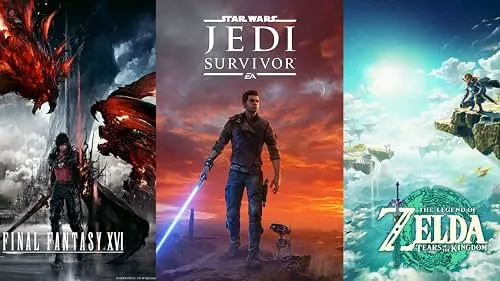
Photo: video game sequel official, via m.media-amazon.com
There's a particular kind of dread that settles in when a sequel trailer drops and something feels off. The logo's familiar, the characters are back, maybe even the music hits the same notes — but the gameplay? Gone. Replaced. "Reimagined." It's happening more in 2026 than at any point in recent memory, and the fan fallout has been loud enough to register on publisher earnings calls. So let's actually dig into it: which 2026 sequels are abandoning their core mechanics, why they're doing it, and whether any of it makes sense.
The Pivot Pattern Is Real — And It's Accelerating
This isn't a new phenomenon. Publishers have been tinkering with beloved formulas for decades — sometimes brilliantly (Resident Evil 4 reinventing survival horror), sometimes disastrously (remember Dungeon Keeper Mobile?). But in 2026, the volume of mechanical overhauls happening simultaneously across major franchises is genuinely unusual. It's not one studio taking a creative swing. It's a pattern, and it's worth asking why.
Part of the answer is market pressure. The games industry had a rough stretch between 2023 and 2025, with layoffs, studio closures, and a string of high-profile commercial disappointments that spooked boardrooms. When a publisher looks at the data and sees that their beloved niche franchise moved two million units while a competitor's action-RPG hybrid moved twelve, the creative direction conversation gets a lot more complicated really fast.
The other part is genuine creative ambition — and it's important not to dismiss that entirely. Some development teams have been living inside the same mechanical framework for three or four entries and genuinely want to build something new. The problem is that "the team wanted a fresh challenge" and "the suits wanted a bigger addressable market" can produce identical outcomes that feel very different depending on which one's actually driving the bus.
Which Franchises Are Actually Doing This Right Now
Without naming titles that haven't been officially confirmed with specific details, the clearest examples in 2026 involve franchises making three distinct types of pivots — and community reactions have split pretty predictably along those lines.
The Genre Swap is the most dramatic and the most controversial. These are sequels that have moved from one gameplay category to another almost entirely — think a strategy series suddenly going third-person action, or a methodical stealth franchise adopting open-world structure with looter elements baked in. Fans of these games aren't just upset about missing features; they're upset because the new game doesn't feel like it's for them anymore. Forum threads in these communities tend to run long and hot, with the recurring phrase "they just wanted to chase [insert competitor here]" appearing with depressing regularity.
The Subtraction Pivot hits differently. This is when a sequel keeps the same genre but strips out specific systems that defined the experience — a deep crafting tree reduced to three buttons, a branching dialogue system replaced with cinematic cutscenes, a punishing difficulty curve sanded down to something that won't scare off a broader audience. These changes often come with official language about "streamlining" or "accessibility," which are legitimate goals but also function as PR cover for decisions that were made with sales projections in a spreadsheet rather than a design document.
The Engine-Forced Reinvention is arguably the most forgivable category and the least discussed. Several 2026 sequels are working on entirely new technology stacks after years on legacy engines, and some of the mechanical changes fans are mourning were genuinely difficult to port forward. Physics-based systems, specific animation rigs, proprietary AI behavior — these things don't always survive an engine migration intact. When studios are transparent about this, communities tend to be more understanding. When they're not, the conspiracy theories fill the vacuum.
The Business Case Studios Are Making (And Whether It Holds)
Publishers aren't wrong that familiar franchises need to grow their audiences to justify AAA budgets that now routinely exceed $200 million. The math on a beloved-but-niche franchise is genuinely brutal when you're trying to recoup that kind of investment. A game that sells three million copies to a loyal fanbase is a commercial disappointment at modern production costs, even if it's a critical darling.
But the counterargument — and it's a strong one — is that the franchises being "broadened" are often being broadened away from the thing that made them worth broadening. You can't chase a mass market audience by dismantling the exact qualities that gave your IP its identity, because at that point you're just releasing a generic action game with a familiar logo on the box. And generic action games with familiar logos have a pretty rough track record lately.
The franchises that have navigated this successfully — and there are some — tend to share a common trait: they expanded outward from their core mechanics rather than replacing them. New systems layered on top of old ones, new modes that don't compromise the experience returning players want, optional complexity rather than mandatory simplification. It's harder to execute and it costs more to develop, but the commercial and critical results tend to justify it.
What the Community Temperature Actually Looks Like
Anecdotally, the discourse around mechanical overhauls in 2026 is more exhausted than it is angry. There's a sense in a lot of fan spaces that this is just what sequels do now — that the game you loved will eventually become something else, and the best you can do is either adapt or find something new to love. That's a pretty grim place for a community to land, and it reflects a broader trust deficit between players and publishers that's been building for years.
The practical impact shows up in pre-order numbers and first-week sales. Several 2026 sequels with heavily publicized mechanical overhauls have tracked notably below their predecessors in pre-launch engagement metrics, even when the marketing budgets were larger. Whether that translates to underperformance at retail remains to be seen, but the signal is there.
The Verdict
Not every mechanical departure is a betrayal, and not every reinvention is a cash grab — but in 2026, the burden of proof is on the studios making these changes to demonstrate they've done more than follow a market research report off a cliff. The franchises worth watching are the ones that can articulate why the old mechanics needed to go, not just that they did. If a developer can't answer that question in a straightforward way, chances are the answer isn't one you're going to like.