Quarter by Quarter: How Publishers Are Carving Up 2026 to Own Your Gaming Budget
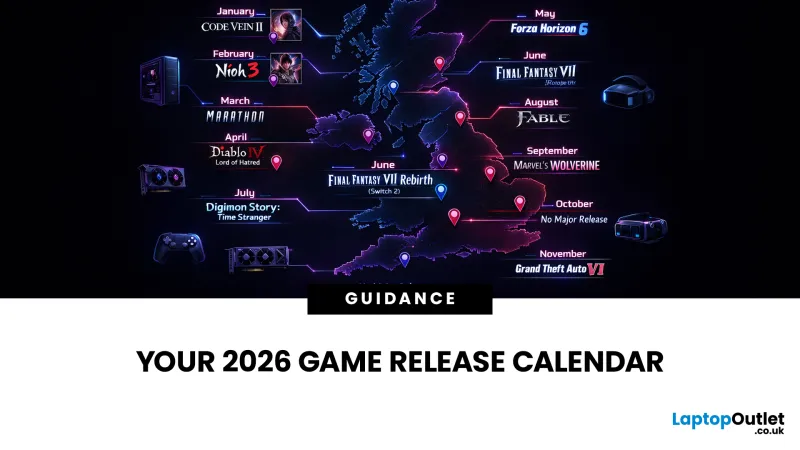
If you've looked at the 2026 release calendar lately and felt a creeping sense of dread, you're not imagining things. This year, major publishers aren't simply dropping games when they're ready — they're executing deliberate, boardroom-approved strategies to claim specific quarters of the year like territory in a land grab. The result is a release landscape that looks less like a schedule and more like a war map, with each major player staking out turf, dodging rivals, and betting big on counter-programming plays that could either pay off spectacularly or blow up in their faces.
Welcome to the 2026 release calendar arms race. Pull up a chair — this is going to cost you.
Q1: The New Battleground Nobody Saw Coming
For years, January through March was considered gaming's dead zone — a graveyard quarter where publishers dumped titles they didn't believe in and quietly hoped for the best. That's no longer the case. In 2026, Q1 has become genuinely competitive, with mid-tier publishers and a handful of bold AAA players recognizing that a strong January or February launch faces dramatically less competition for review coverage, social media attention, and consumer spending.
The logic is straightforward: the holiday season empties wallets and clogs backlogs. A high-quality game landing in late January or early February catches players who've cleared their Christmas queue and are hungry for something new. Publishers who've internalized this are quietly scheduling some of their more confident releases here, banking on the fact that a game reviewed in relative isolation gets a fairer shake than one buried under five simultaneous AAA launches.
The risk, of course, is that consumer spending genuinely is lower post-holidays. Publishers launching in Q1 are trading competition avoidance for a smaller overall market. It's a calculated gamble, and not everyone is comfortable making it.
Q2: The Showcase Season Squeeze
Spring is where things get genuinely chaotic. The stretch between April and June now functions as a second holiday season, supercharged by the annual showcase circuit — State of Play, Xbox showcase events, and the ever-expanding shadow of Summer Game Fest, which has effectively colonized early June as gaming's Super Bowl week.
Publishers with games releasing in Q2 face a paradox. Announce too early and your game risks being overshadowed by the showcase noise. Announce too late and you miss the pre-order momentum that comes from sustained marketing buildup. The sweet spot — a reveal at one showcase followed by a release six to eight weeks later — has become so overcrowded that publishers are now deliberately staggering their showcase appearances to avoid cannibalizing each other's news cycles.
What's emerged is a kind of unspoken scheduling diplomacy. Studios with relationships at the same publisher are reportedly — and we stress reportedly, based on industry chatter rather than confirmed sourcing — coordinating reveal timing internally to avoid stepping on each other's announcements. Whether that coordination extends across competing publishers is harder to verify, but the pattern of releases in 2026's Q2 window suggests someone, somewhere, is at least paying attention to the broader calendar.
Q3: The Counter-Programming Gamble
Here's where it gets interesting. Summer has traditionally been a lighter period for major releases, but 2026 has seen a cluster of publishers making aggressive bets on July and August launches. The theory: release during a window when the big players are holding back for fall, and you own the conversation.
It's a strategy that's worked before — and failed spectacularly before. The publishers winning the counter-programming game in 2026 tend to be those with games that have genuine word-of-mouth momentum: titles that players actively want to talk about on social media, recommend to friends, and stream. A summer release with organic buzz can punch well above its weight class. A summer release that needs a massive marketing push to move units is a much tougher proposition when your rivals are saving their ad budgets for Q4.
The studios taking the biggest swings in this window are, perhaps unsurprisingly, the ones with the most community goodwill built up from previous releases. Trust is a form of marketing budget, and some developers have been spending years accumulating it.
Q4: The Hunger Games
And then there's the fall. October through December remains the most crowded, most expensive, and most brutally competitive window in the release calendar — and publishers keep piling in anyway. The math is simple: holiday gifting cycles, Black Friday bundles, and the cultural gravity of "the big fall game" make Q4 the highest-ceiling quarter for a breakout hit.
But the floor is also brutal. Games releasing in the same week as a major franchise installment can find themselves functionally invisible regardless of quality. Review scores get lost in the noise. Marketing spend that would dominate any other quarter barely registers. In 2026, the Q4 cluster is particularly dense, with multiple major sequels and at least one significant new IP all reportedly targeting the same six-week window based on pre-announcement placeholder dates observed by industry trackers.
Some publishers are clearly gambling that their franchise loyalty is strong enough to pull players away from competing launches. Others are betting on timing precision — the difference between releasing a week before a major competitor versus a week after can mean millions of dollars in first-week sales.
Who's Actually Winning?
The publishers coming out ahead in 2026's calendar chess match share a few common traits. They're communicating release dates clearly and early, giving players time to budget. They're avoiding the most congested windows unless they have an extremely compelling reason to compete directly. And they're treating the release date itself as a marketing asset rather than an afterthought.
The ones struggling are those treating the calendar like a battlefield to conquer rather than a resource to manage. Stacking releases, shifting dates at the last minute, and announcing windows without committing to specific dates all erode player trust in ways that don't show up immediately but compound over time.
The 2026 release calendar is genuinely exciting — there's a lot of great stuff coming. But the strategic maneuvering happening behind the scenes means that what you play, when you play it, and how much attention it gets is being shaped by decisions made in conference rooms, not development studios. That's worth knowing before you lock in your pre-orders.
The release calendar arms race is one worth watching — because the publishers who blink first might just be the ones who actually respect your time.