The Second Reveal Slump: Why Returning From the Dark Doesn't Get Games the Hype They're Expecting in 2026

The Second Reveal Slump: Why Returning From the Dark Doesn't Get Games the Hype They're Expecting in 2026
The first time a game gets announced, there's a specific kind of electricity in the room — or the timeline, as it were. A logo appears. A cinematic teaser plays. The internet loses its collective mind for approximately 72 hours. It's one of gaming's most reliable emotional beats, and publishers have spent decades learning how to manufacture it.
What they're still struggling to manufacture is the second version of that moment.
In 2026, the re-reveal problem has become one of the most talked-about issues in games marketing. Titles that were announced years ago, went quiet — sometimes for two or three years — and have now returned with new trailers are finding that the reception is measurably cooler the second time around. The buzz doesn't spike the same way. The clips don't circulate as widely. The conversation moves on faster. And for studios that spent years in development banking on a triumphant return to the spotlight, that's a genuinely alarming pattern.
Why the First Reveal Is a Cheat Code
To understand the re-reveal problem, you have to understand why the first announcement is so disproportionately powerful. A debut reveal benefits from novelty — it is, by definition, the first time anyone has seen this thing exist. The audience has no preconceptions, no history of disappointment, no accumulated skepticism. They're reacting to pure potential, and potential is the most intoxicating currency in gaming.
The algorithm rewards novelty too. A new IP or a long-dormant franchise returning from the dead generates the kind of engagement spikes that push content to the top of feeds organically. People share it because it's new, because their friends haven't seen it yet, because being first to post something is its own social reward.
By the time a game comes back for its re-reveal, none of those conditions apply. The audience already knows this game exists. They've already formed opinions — or, more dangerously, they've simply forgotten. The algorithm doesn't treat a returning trailer the same way it treats a debut. And the social dynamics shift: instead of sharing out of excitement, people are more likely to share out of skepticism, asking why it took so long or what happened in the gap.
The Silence Problem
The length of the silence between announcement and re-reveal matters enormously, and 2026 has produced several case studies worth examining. Games that went dark for 18 months to two years have generally fared better on return than those that vanished for three years or more. The longer the gap, the more the audience's mental model of the game has calcified — they've either moved on entirely or built up an idealized version of what the game could be that no real trailer can match.
Hollow Knight: Silksong is the most extreme example of this dynamic in the current moment. Team Cherry's follow-up to one of the most beloved indie games ever made was announced in 2019, generated enormous excitement, and has since become a cultural shorthand for the gap between announcement and delivery. Every subsequent mention of the game — every non-update, every showcase appearance that ends without a release date — has progressively drained the goodwill reservoir. The community hasn't abandoned it, but the conversation has shifted from excitement to exhausted gallows humor. A re-reveal now would face an audience that has been burned by anticipation so many times that genuine enthusiasm feels almost too risky to express.
 Photo: Team Cherry, via mir-s3-cdn-cf.behance.net
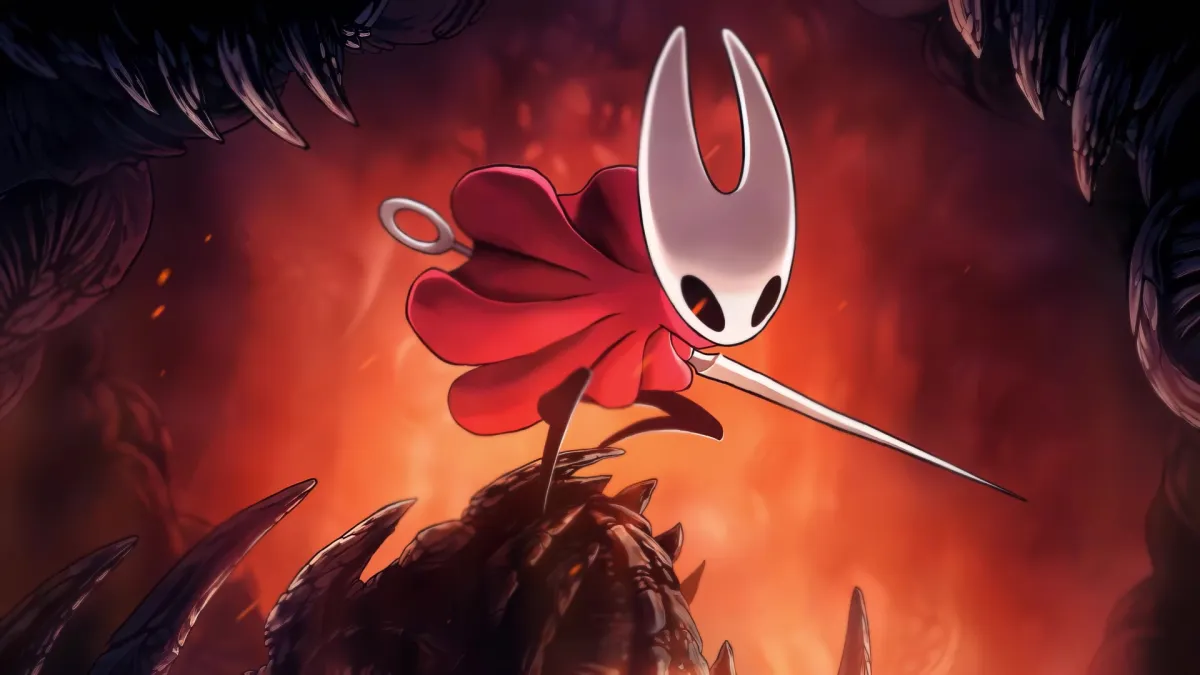 Photo: Hollow Knight: Silksong, via moewalls.com
What the Data Suggests About Engagement
Without citing specific proprietary analytics, the pattern is visible in publicly observable metrics. Re-reveal trailers for long-dormant games in 2026 are consistently generating fewer organic shares, less sustained trending activity, and shorter discourse cycles than their initial announcements did. The comments sections tell a story: where debut reveals are dominated by excitement and speculation, re-reveals are more likely to feature cynicism, jokes about development hell, and demands for a release date before anyone will commit to caring.
The exception to this pattern is when the re-reveal contains a genuine surprise — a dramatic visual upgrade, a completely new direction, or most powerfully, a release date. A confirmed launch window transforms a re-reveal from a 'we still exist' message into an 'it's actually happening' event, and that distinction is the difference between a news cycle and a cultural moment.
How Studios Are Adapting
The smarter studios in 2026 have started treating the re-reveal not as a sequel to the original announcement but as an entirely new launch in its own right. That means rebuilding the information architecture from scratch — assuming the audience knows nothing, leading with the most visually arresting content possible, and front-loading the practical information (platforms, release window, price) that transforms interest into intent.
Some publishers have moved toward what might be called the 'quiet return' strategy: instead of a big showcase re-reveal, they surface the game gradually through hands-on previews at smaller events, letting journalists and content creators do the work of re-introducing it to audiences through earned coverage rather than paid spectacle. This approach trades the spike for a slower build, and it tends to produce more durable buzz because the coverage comes with credibility attached.
Others have leaned into the gap itself, acknowledging the long development period directly and using the re-reveal to explain what changed — treating the silence as a story rather than an embarrassment. When a studio can say 'we went back to the drawing board and here's what we built instead,' it reframes the wait as evidence of ambition rather than dysfunction.
The Games That Got It Right — and Wrong — in 2026
The re-reveals that have landed best in 2026 share a few common traits: they came with release dates, they showed substantial gameplay rather than cinematic trailers, and they gave audiences a clear reason to update their mental model of what the game is. The ones that fell flat tended to do the opposite — arriving with beautiful but vague imagery and no concrete commitments, asking audiences to invest emotional energy in a game that had already asked for that energy once before without delivering.
The industry's collective lesson from 2026's re-reveal cycle is uncomfortable but clear: you cannot manufacture the same excitement twice with the same tools. The first reveal is lightning. The second one has to be something different — more grounded, more specific, more honest about where the game actually is — if it's going to move the needle at all.
For every title currently sitting in the dark, waiting for its moment to return to the spotlight: the internet's attention is not a renewable resource. When you come back, you'd better bring a date.