Does Your Game Actually Work For Everyone? Grading 2026's Biggest Releases on Accessibility
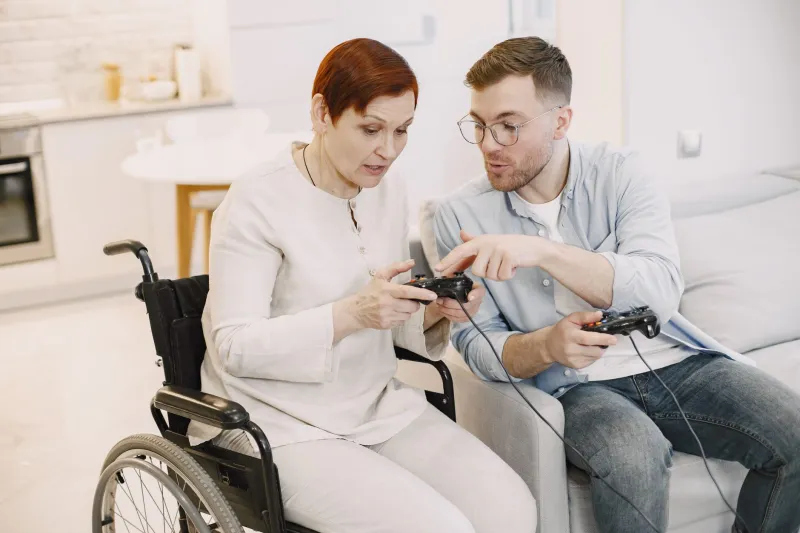
The games industry loves to talk about accessibility. Developer sessions at major conferences, Twitter threads from studio heads, dedicated accessibility pages on publisher websites — the messaging has never been better. The actual features shipping in 2026's biggest titles? That's a more complicated story.
We spent time digging into the accessibility feature sets of this year's major releases, cross-referencing developer documentation with community feedback from disabled players and disability advocacy organizations. What we found is an industry that has made genuine, meaningful progress in some areas — and is still, frustratingly, leaving entire categories of players behind in others.
This isn't a think piece about whether accessibility matters. It does, full stop. This is a practical breakdown of who's doing it right, who's falling short, and what the gap between those two groups actually looks like in 2026.
Why This Year Matters
The benchmark for accessibility in mainstream gaming was reset — dramatically — by a handful of titles between 2018 and 2022. The Last of Us Part II is the reference point almost everyone in the industry uses, and for good reason: it shipped with over 60 accessibility options at launch, covering visual, auditory, motor, and cognitive needs in ways that hadn't been seen at that scale before. It demonstrated, conclusively, that comprehensive accessibility features were achievable at AAA scope without compromising the experience for players who didn't need them.
That was 2020. It's now 2026, and the question the disability gaming community is rightly asking is: why are some of this year's biggest releases still shipping without features that were considered baseline six years ago?
The Features That Actually Matter
Before getting into the grades, it's worth establishing what a genuinely accessible game looks like in 2026. Advocacy organizations and disabled players themselves have been consistent about the core feature categories that matter most:
Visual accessibility covers colorblind modes (and not just the generic red-green deuteranopia toggle — proper tritanopia and achromatopsia support too), high-contrast UI options, text scaling, and the ability to reduce or eliminate motion effects and screen shake.
Auditory accessibility means comprehensive subtitle support — not just dialogue captions, but environmental audio cues, speaker identification, and the ability to customize font size and background contrast on subtitle text. It also means visual indicators for directional audio information that deaf and hard-of-hearing players would otherwise miss.
Motor accessibility is where the gaps in 2026 are most visible and most frustrating. Full button remapping — across every input, not just a curated subset — should be a given at this point. So should the ability to toggle rather than hold inputs, adjustable aim assist, and one-handed control scheme options. The number of major 2026 releases that still ship without complete remapping support is genuinely hard to defend.
Cognitive accessibility is the category the industry talks about least and delivers on most inconsistently. This covers difficulty customization (not just preset difficulty tiers, but granular sliders for individual challenge elements), navigation assists, the ability to pause during cutscenes, and clear, readable UI design that doesn't assume every player processes information at the same speed.
Who's Leading the Pack
The studios setting the standard in 2026 are, perhaps unsurprisingly, the ones that have invested in dedicated accessibility teams or ongoing relationships with disability consultants. When accessibility is built into the design process from pre-production rather than retrofitted in the final months before launch, the results are measurably better — more comprehensive, more coherent, and less likely to introduce new barriers while solving old ones.
The titles drawing the most praise from accessibility advocates this year are the ones where disabled players report being able to complete the game's core experience without hitting walls that their non-disabled peers don't encounter. That sounds like a low bar. In practice, it's still not universally cleared.
Particular credit is being given in 2026 to studios that have gone beyond checkbox compliance and thought carefully about how accessibility features are presented. Burying a colorblind mode six menus deep in the settings screen is technically shipping the feature. It's not the same as surfacing it prominently at first launch, which is what actually ensures players who need it will find it.
Who's Still Falling Short
The frustrating part of auditing 2026's release slate is that the failures aren't coming from studios that are unaware of accessibility expectations. These are publishers that have shipped accessible titles before, that have public commitments to inclusive design, and that are still releasing games with incomplete subtitle systems, locked control schemes, or difficulty structures that have no accommodation for players with motor or cognitive disabilities.
The excuses that circulate in these conversations — development time, scope constraints, "it's on the roadmap" — have worn thin in a year when smaller studios with a fraction of the resources are shipping more complete accessibility features than some of the industry's largest publishers. Scope and timeline are real constraints. They're not a sufficient explanation for why a game with a nine-figure development budget doesn't have adjustable subtitle size at launch.
Post-launch patching of accessibility features has become a pattern that disability advocates are pushing back on explicitly. Being told that colorblind support or full button remapping is "coming in a future update" places the burden of waiting on the players who need those features to engage with the game at all. It's not an equivalent experience to what every other player gets on day one.
The Accountability Gap
One of the structural problems in holding publishers accountable for accessibility is that there's no standardized, enforceable framework for what a game must include at launch. Organizations like AbleGamers, SpecialEffect, and the Game Accessibility Guidelines project have done enormous work establishing best practices and working directly with studios. But adoption is voluntary, and the industry's self-regulatory instincts on this have historically trended toward doing the minimum required to avoid negative press rather than genuinely centering disabled players in the design process.
What's changed in 2026 is the visibility and organization of the disabled gaming community's feedback. Pre-release accessibility previews — where disabled players and advocates are given early access specifically to evaluate and report on accessibility features — are becoming more common, and the studios participating in them are producing better outcomes. The studios that aren't participating are increasingly conspicuous by their absence.
The Practical Buying Guide
For disabled players trying to navigate 2026's release calendar, the most reliable resources remain community-driven databases and advocacy organization reviews rather than publisher feature lists, which have a history of overpromising and underspecifying. Sites and organizations dedicated to accessibility auditing are doing the detailed, feature-by-feature work that games journalism — including this site — should be doing more consistently.
What you should be looking for before purchasing: confirmed full button remapping, subtitle customization beyond basic on/off, and at least one publicly documented accessibility consultation in the game's development credits. Those three data points won't tell you everything, but they'll tell you whether the studio was thinking about this at all.
Bottom line: 2026's accessibility landscape has genuine bright spots, but the gap between the industry's leaders and its laggards is still wide enough that disabled players are being asked to accept a meaningfully worse experience in far too many of this year's biggest releases — and that's not a technical problem, it's a priority problem.