Gone From Your Console: The 2026 Platform Skips Publishers Don't Want to Discuss
Gone From Your Console: The 2026 Platform Skips Publishers Don't Want to Discuss
There's a particular kind of frustration that hits different than a delay. It's not the sting of waiting longer — it's the realization that the game you've been tracking for months simply isn't coming to your console at all. No announcement. No press release. Just a store page that lists every platform except the one you own. In 2026, that experience has become disturbingly common, and the publishers responsible are, almost universally, saying nothing about it.
This isn't a small trend. Across the 2026 release calendar, a meaningful cluster of high-profile multiplatform titles have confirmed launches on PS5, Xbox Series X|S, and PC — while quietly omitting Nintendo Switch 2. Others have shown up on Switch 2 and PlayStation but skipped Xbox entirely. And in a handful of cases, PC players are being told to wait for a version that may or may not arrive on a timeline anyone will confirm. The pattern is real. The explanations are not.
The Usual Suspects: Who's Getting Skipped?
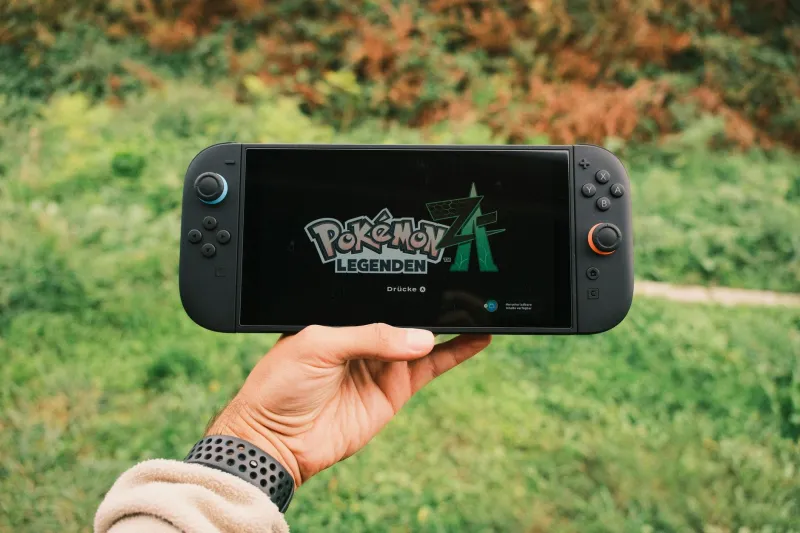
The Switch 2 situation is probably the most visible. Nintendo's new hardware launched earlier this year with a spec sheet that, while genuinely impressive compared to its predecessor, still sits below PS5 and Xbox Series X in raw horsepower. Developers building for current-gen have a choice: port down, or skip. In 2026, more of them are choosing to skip.
Several major third-party titles confirmed for PS5 and Xbox this year have no Switch 2 version listed anywhere — not on the publisher's own website, not in press materials, not on Nintendo's eShop roadmap. When outlets ask directly, the standard response is some variation of "we have nothing to announce for additional platforms at this time." That's PR language for "probably not, but we don't want to say that out loud."
The Xbox side of the equation is messier. A handful of titles that appeared in PlayStation State of Play presentations this year arrived with no Xbox version in sight. Some of those carry the fingerprints of a timed exclusivity deal — the kind where a publisher takes platform funding in exchange for a window of exclusivity, with the understanding that the game eventually comes everywhere. But "eventually" is doing a lot of work in that sentence, and for US players who bought an Xbox Series X based on multiplatform promises, it's a hollow comfort.
The Money Behind the Silence
Let's be direct about what's actually happening here. Platform exclusivity deals — timed or otherwise — involve real money changing hands. Sony, Microsoft, and Nintendo all have funds specifically designed to secure either full exclusivity or timed windows on third-party titles. Publishers, especially mid-size ones operating on tighter margins, take that money because it de-risks a release. The platform holder effectively pre-buys a portion of the game's revenue in exchange for keeping it off a competitor's storefront for a set period.
The reason publishers don't talk about this openly is contractual. Most of these deals include non-disclosure clauses that prevent either party from confirming the arrangement exists. So when a game shows up on PS5 but not Xbox, the publisher can't say "Sony paid us to do this" — they just have to smile and say nothing. Players are left to connect the dots themselves.
Technical limitations are also real, but they're being used as cover more often than they're genuinely the culprit. Some games are legitimately too demanding to run well on Switch 2 hardware. Others could almost certainly be ported with reasonable effort but aren't, because the commercial calculus doesn't add up. A Switch 2 port requires development resources, QA time, and platform certification. If the publisher doesn't expect enough Switch 2 sales to justify that investment — or if a platform deal is already in place — the port simply doesn't happen.
What It Actually Costs American Players
For US consumers, the practical impact depends entirely on which console you own. PlayStation players are in the best position heading into the back half of 2026 — the PS5 library is robust, and Sony's platform relationships have delivered a strong slate of third-party titles, including several that are either exclusive or launching there first. Xbox players are navigating a more complicated reality. Game Pass remains a genuine value proposition, but the console's third-party situation has some notable gaps this year that Microsoft hasn't addressed publicly.
Switch 2 owners face the most acute version of this problem. Nintendo's first-party lineup is, as always, exceptional — but the promise of a stronger third-party presence on Switch 2 has run into the same wall it always does. Some publishers are supporting the platform. Others are not. And the ones who aren't aren't saying why.
For anyone who bought hardware specifically because they expected a certain game to be on it, the platform skip is a genuine consumer issue. There's no legal recourse, no refund path, and no timeline for when — or whether — the situation changes.
The Quiet Workarounds
Some players are adapting. PC gaming has become the de facto safety net for multiplatform gaps, and Steam Deck ownership in the US has climbed steadily as a result. If a game skips your console, there's a reasonable chance it's on PC, and a decent chance it runs on a Deck. That's not a solution — it's a workaround that requires additional hardware investment — but it's the one that's actually available.
Cloud gaming is theoretically another answer, but the latency and library limitations of services like Xbox Cloud Gaming mean it doesn't fully replace a native version for most players.
What Needs to Happen
The simplest fix is transparency. Publishers don't have to disclose the financial terms of platform deals, but they could at minimum confirm when a game is not coming to a specific platform rather than leaving players in limbo. "This title is not currently planned for Nintendo Switch 2" is a sentence that costs nothing to say and would save a lot of people from buying hardware under false assumptions.
Until publishers are willing to have that conversation, the platform skip problem is going to keep compounding. The 2026 release calendar has already demonstrated that it's not a one-off quirk — it's a structural feature of how games get made and distributed right now. And the players absorbing the cost of that structure are the ones who deserve the least explanation and are getting the most silence.
If you're shopping for hardware right now, the uncomfortable truth is that no single console guarantees you'll get every game you want — and publishers are actively incentivized to keep you from knowing which ones you'll miss.