Same Game, Different Price Tag: How 2026's Storefront Wars Are Costing You Real Money

Same Game, Different Price Tag: How 2026's Storefront Wars Are Costing You Real Money
Let's say you want to buy one of 2026's biggest releases on day one. You fire up your PlayStation 5, head to the PlayStation Store, and see a $79.99 price tag staring back at you. Your buddy texts you that he grabbed the same game on Steam for $59.99. Your other friend found it at Best Buy for $64.99 with a $10 reward certificate on top. You're all playing the exact same game. You just paid the most for it. Welcome to the 2026 storefront pricing ecosystem — a fragmented, confusing, and frankly exhausting landscape that's quietly draining wallets across the US gaming community.
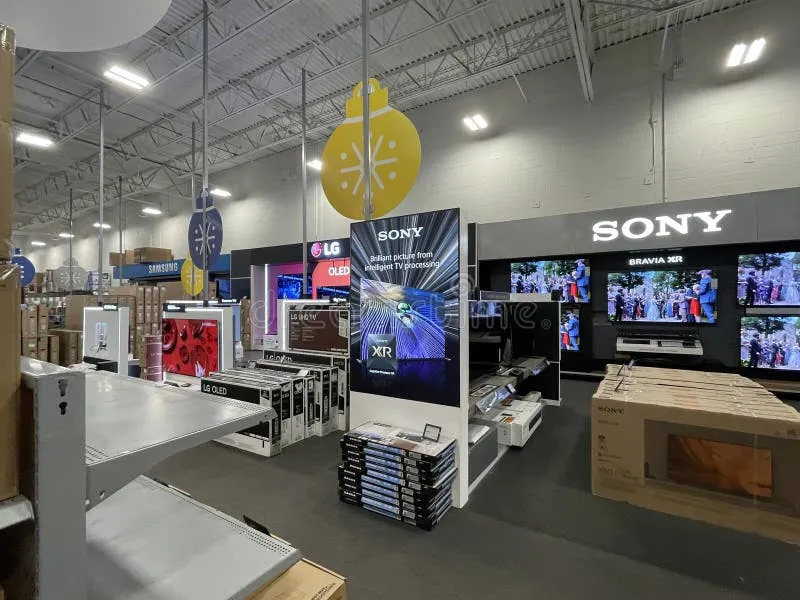 Photo: Best Buy, via thumbs.dreamstime.com
 Photo: PlayStation Store, via pics.craiyon.com
This isn't a new problem, but in 2026 it has become significantly more pronounced. With base game prices now routinely hitting $79.99 on first-party console storefronts, the spread between the cheapest and most expensive legitimate purchase option for a single title has widened to as much as $20 to $30 depending on the game, the platform, and where you're buying. That's not a rounding error — that's a full indie game.
The Console Tax Is Real, and It's Getting Worse
First-party digital storefronts — the PlayStation Store, Xbox Marketplace, and Nintendo eShop — have always carried a premium, but 2026 has made that gap harder to ignore. Sony and Nintendo have both held firm on $79.99 list prices for their biggest releases, while Microsoft's Xbox Marketplace pricing has been more variable, partly because the Game Pass ecosystem creates a different calculus for Xbox players entirely.
The problem is that console storefronts rarely discount games at launch. A title might sit at full price on the PlayStation Store for three to four months before seeing its first meaningful sale, while the same game appears on Fanatical, Humble Bundle, or even Amazon with 15 to 20 percent off within the first few weeks. For digital-only PS5 or Switch 2 owners, that discount is simply out of reach unless they're willing to jump through hoops — and many aren't.
Nintendo's eShop deserves a special mention here. The company has historically been the most resistant to discounting its own titles, and 2026 has continued that trend. Several major Nintendo Switch 2 releases have held their launch prices for months with no regional promotions, no loyalty discounts, and no competitive pressure applied. If you want it on Switch 2 and you want it digital, you're paying whatever Nintendo says you're paying. Full stop.
Steam vs. Console: The PC Advantage Nobody Talks About Enough
PC gaming has always had a pricing advantage, but in 2026 that edge is sharper than ever. Steam's regional pricing, frequent seasonal sales, and aggressive third-party key reseller ecosystem mean that a savvy PC gamer can routinely pay 20 to 40 percent less for the same title a console player buys at full price — sometimes on day one.
It's worth noting that Steam itself doesn't always launch games cheaply. Several major 2026 releases have hit Steam at $69.99 or even $79.99 at launch, matching console pricing. But the difference is that within days, sites like Fanatical, Green Man Gaming, and CDKeys are often selling Steam keys for the same game at a meaningful discount, sometimes as low as $54.99 or $59.99. That's a legitimate, publisher-approved distribution channel that console players simply don't have access to.
The third-party key market isn't without risk — gray-market sites operate in a legal gray zone — but for reputable sellers, the savings are real and the keys are valid.
Physical Retail: The Comeback Nobody Expected
Here's something counterintuitive: in 2026, buying a physical copy from a brick-and-mortar retailer is sometimes the smartest financial move a console gamer can make. Best Buy's My Best Buy loyalty program, Target Circle, and Amazon's pre-order price guarantee have all created scenarios where physical day-one purchases come with meaningful attached value.
Best Buy, for instance, has been bundling $10 reward certificates with pre-orders on select titles throughout 2026 — effectively knocking a game from $79.99 down to $69.99 in real spending terms. Amazon has run pre-order promotions on several high-profile releases with Prime member discounts bringing prices down to $71.99 or $67.99 at launch. These aren't dramatic savings, but they're real money in a year where $79.99 has become the new normal.
The catch, of course, is that physical media requires a disc drive — something the cheaper hardware SKUs on both PlayStation and Xbox don't have. If you bought the discless version of your console to save money upfront, you've inadvertently locked yourself into a more expensive long-term purchasing model. That's a trade-off the hardware manufacturers are counting on.
Game Pass and PS Plus: The Wildcard That Changes Everything
No pricing conversation in 2026 is complete without addressing subscription services, and the math here is genuinely complicated. Xbox Game Pass Ultimate runs $19.99 per month, and if a game you want launches day one on the service — as a growing number of Xbox first-party titles do — your effective purchase price is zero incremental cost. That's an extraordinary value proposition, and it's one Microsoft has leaned into heavily this year.
PS Plus Extra and Premium have been less consistent about day-one inclusions, with Sony generally holding its biggest releases off the service for six months to a year. When those games do arrive, they're a genuine win for subscribers — but if you want to play at launch, you're still paying full price on the PlayStation Store.
The subscription calculus gets murkier when you factor in how many games you actually play. If you're a one or two games per month player, Game Pass Ultimate at $19.99 represents exceptional value. If you're buying five or six titles a year and playing them for hundreds of hours each, owning outright — especially via discounted physical copies — might actually be cheaper over a 12-month period.
What This Means for You Right Now
The practical takeaway is straightforward even if the ecosystem isn't: before you buy anything in 2026, spend two minutes checking prices across platforms. IsThereAnyDeal.com remains one of the best tools for PC gamers to track historical pricing and current deals. For console players, CheapShark tracks digital console deals. Physical retail prices are worth checking on Amazon and Best Buy before any major launch, particularly if you have loyalty memberships.
The publishers and platform holders are not going to fix this for you. The pricing fragmentation exists because it benefits them — different storefronts extract maximum value from different consumer behaviors. The only person who can close that $20 gap is you, and the tool to do it is thirty seconds of comparison shopping.
In a year where $79.99 has become the industry's new baseline, those thirty seconds are worth more than ever.