Silent Launches: The Growing List of 2026 Games With Release Dates and Absolutely No Buzz
Open Steam on any given Tuesday and you'll find them: games with fully populated store pages, confirmed release dates, screenshots, feature lists, and system requirements — and a community hub that looks like a ghost town. No forum posts. No wishlists worth mentioning. No press coverage, no trailer views worth bragging about, no social media footprint to speak of. These are 2026's ghost games, and there are more of them than ever.
The phenomenon isn't new, but its scale in 2026 has reached a point that warrants a serious look. Dozens of titles across Steam, the PlayStation Store, and the Microsoft Store have locked-in dates on the calendar and essentially zero marketing infrastructure behind them. Some are small indie projects with no budget for promotion. Others, more troublingly, are mid-sized releases from studios that clearly had the resources to do more — and chose not to, or couldn't.
 Photo: PlayStation Store, via static0.gamerantimages.com
So what's going on?
The Market Saturation Problem
The most straightforward explanation is volume. Steam alone now processes somewhere in the range of 10,000 to 14,000 new releases per year, depending on how you count early access entries, and that number has been climbing steadily. The PlayStation Store and Xbox storefronts are less crowded but have expanded significantly. The result is a discovery environment so competitive that simply existing on a storefront is no longer enough to generate any organic attention.
For smaller developers, this is brutal math. A marketing campaign capable of breaking through the noise — paid social, influencer partnerships, press outreach, trailer production — costs money that many studios don't have, especially post-launch. And the window in which any of that investment pays off is shrinking. Games that don't generate wishlist momentum in the weeks before launch rarely recover after it.
But the ghost game problem in 2026 isn't limited to micro-studios working on shoestring budgets. Some of the quietest upcoming launches belong to titles from recognizable developers — games with legitimate pedigrees and reasonable production values — that appear to have simply been deprioritized by their publishers.
Why Publishers Go Quiet
When a publisher has a game with a confirmed release date but no visible marketing push, there are usually a few explanations. The most common: the title has been internally downgraded. It started development with higher ambitions, hit creative or technical obstacles, and somewhere along the way the publisher decided it wasn't worth a full marketing spend. The release date stays on the calendar because cancellation has its own costs — developer contracts, platform certification fees, and the reputational hit of pulling a game entirely — but the promotional machine is quietly switched off.
Another common scenario is timing conflict. Publishers with crowded release calendars in 2026 have had to make hard choices about which titles get the marketing firepower. When a flagship release lands in the same quarter as a mid-tier title, the mid-tier game often gets bumped to a skeleton crew of social posts and a single trailer. It ships, it generates whatever revenue it generates, and it's quietly folded into the back catalog.
There's also a growing category of games that are essentially platform-obligation releases — titles developed to fulfill contractual commitments to storefronts or to maintain a studio's release cadence, without genuine commercial expectations attached. These games have dates because they need dates. Whether anyone plays them is almost beside the point.
The Discoverability Cliff
What makes 2026's ghost game problem particularly acute is the deterioration of organic discovery tools. Steam's algorithm rewards games that already have momentum — wishlists, reviews, concurrent players — creating a feedback loop where games that launch quietly tend to stay quiet. The PlayStation Store's editorial curation is selective, favoring titles with existing press coverage or publisher relationships. The Xbox storefront has similar dynamics.
For US gamers, this means that the games surfaced by default discovery tools represent an increasingly small fraction of what's actually available. The mid-tier and lower titles — the ones that might actually be worth your time if you stumbled across them — are effectively invisible unless you're actively looking.
Gaming content creators have partially filled this gap, with some YouTubers and streamers building audiences specifically around surfacing overlooked titles. But creator attention follows its own algorithmic logic, and a genuinely unknown game with no existing community is a hard pitch even for creators who specialize in discovery content.
Could Any of Them Break Through?
History suggests that silent launches occasionally produce surprises. The gaming landscape is full of titles that shipped without fanfare and found their audiences weeks or months later through word of mouth, a single viral clip, or a well-timed feature in a newsletter or Subreddit. Among Us is the canonical example, but there are smaller-scale versions of that story every year.
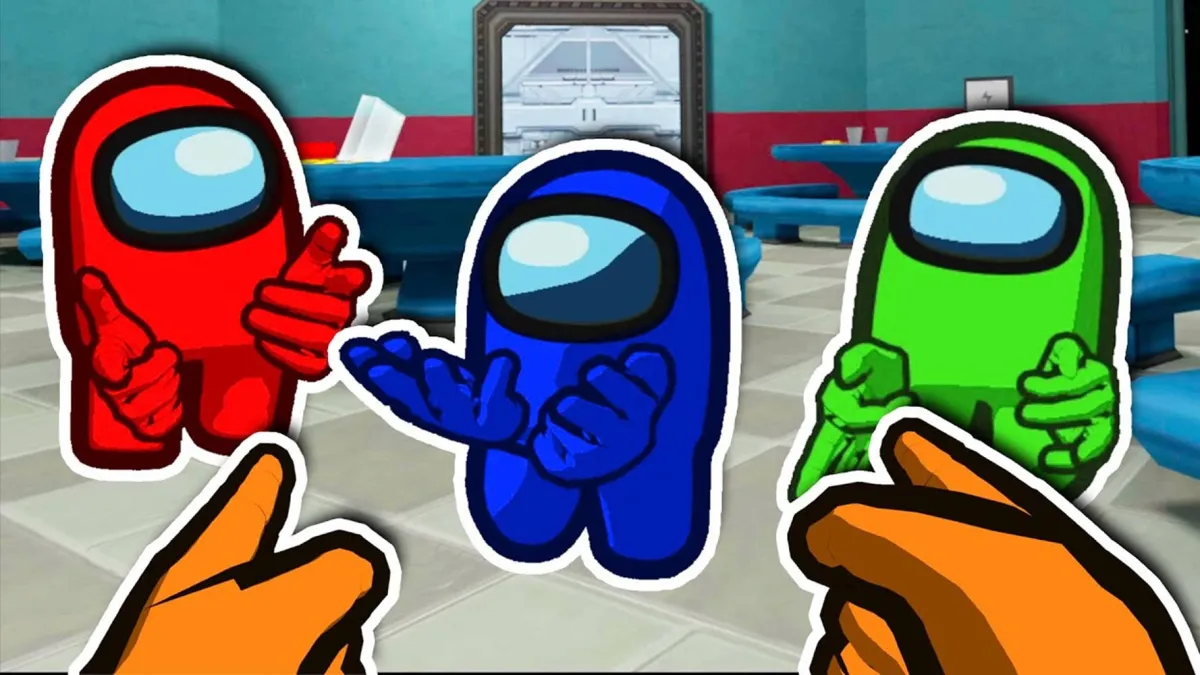 Photo: Among Us, via wallpapers.com
The conditions for a breakout are specific, though. The game needs to be genuinely good — not just competent, but good enough that the people who do find it feel compelled to tell others. It needs to have some hook that translates well to short-form video or screenshots. And it needs at least one early advocate with reach, whether that's a creator, a journalist, or a community figure who champions it before it disappears.
In 2026, those conditions are harder to meet simultaneously than they've ever been. The content pipeline is so full that even genuinely excellent small games struggle to hold attention long enough to build momentum. A breakout still happens — it happened this year, in fact, more than once — but the ratio of ghost games to breakouts has shifted dramatically toward the former.
What This Signals About the Industry
The ghost game problem is, at its core, a market health problem. An industry in which dozens of games launch every week into a void of indifference — games that real people spent real years making — is one with a structural mismatch between supply and the infrastructure needed to connect that supply to interested players.
For indie developers specifically, the 2026 environment is one of the most challenging in recent memory. The cost of development has risen. The cost of effective marketing has risen faster. The number of competing releases has grown. And the platforms that could theoretically help surface quality work have financial incentives that don't always align with discovery.
The games with confirmed dates and no buzz aren't all bad games. Some of them are probably excellent. But in a release calendar as saturated as 2026's, being excellent isn't enough. You have to be loud, or lucky, or both — and a lot of genuinely good work is going to disappear without either.
If you've been sleeping on the quiet end of the release calendar, it might be worth a scroll. You might find something worth talking about. Someone has to.